Tag Archives: fiction

#23. American Gods by Neil Gaiman

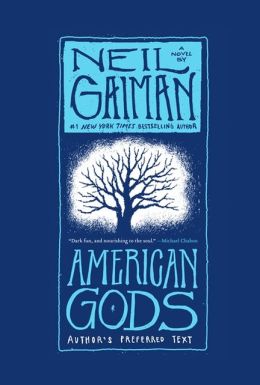
ImageAmerican Gods by Neil Gaiman is many things. It is a road trip novel. It is a mystery, a thriller. It is in parts horrific, and in many ways beautiful. It is a story of modern mythology, set in a changing America still heavily populated by the gods of old worlds. And a few new gods as well.

We meet our protagonist Shadow in prison, shortly before he is released. He seems so simple on the outside, a strong man just doing his time and keeping his head down. Once he gets out and meets the mysterious man in a pale suit called Wednesday, his life will never be simple again.

I love the diverse mythologies woven into this universe. There are journal entries between chapters explaining the origins of various gods in America, gods who traveled from regal Egypt and icy Norway to rural towns in Illinois and Wisconsin, nestled deep in the hearts of those who believed in them. I especially liked the prominent placement of The House on the Rock, a crazy museum/huge diorama/creepshow that I visited myself when I was very young. And, like the gods in the book, I could certainly believe it is a bizarrely sacred place.

I fell in love with this book, with the mystery and mythology of it. Not just the mythology of those old worlds and beliefs, but of American mythology as well, of culture heroes and secret dreams and a land that is good for men but troubling for gods. I would highly recommend it, and am very grateful that it was recommended to me. (Thank you, Twitterverse!)
Leave a comment

Filed under Uncategorized

Fall Favorites: #21. The Gates & #22. The Long Halloween

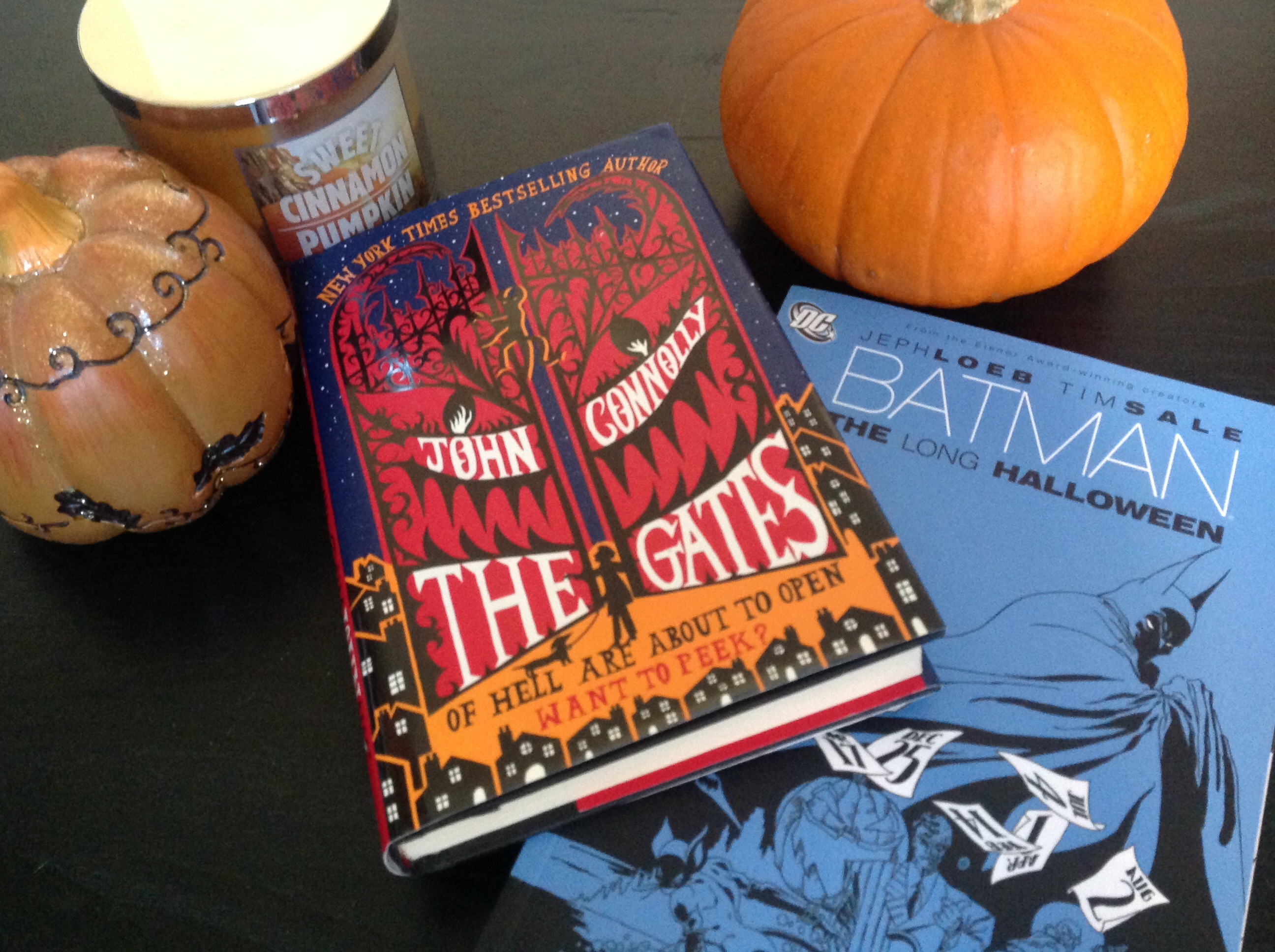
fall fave booksI took a break last week from American Gods to read some Halloween fare: The Gates By John Connolly and The Long Halloween by Jeph Loeb and Tim Sale. The Gates is an entertaining story about a young boy named Samuel who stumbles upon a demonic plot to overthrow Earth while trick-or-treating three days before Halloween. (He feels his early attempts will be admired for his “initiative.”) A portal to the gates of Hell is opened when a “bit” out of the Large Hadron Collider flies off and winds up in the basement of bored suburbanites performing strange rituals, you know, just to liven things up a bit. Samuel spends the next three days trying to warn the town about the oncoming disaster and ultimately turns to his friends, his small dog, a misplaced minor demon named Nurd, and the CERN team in Switzerland to help vanquish his monstrous foes. This is is a fun, lighthearted, read that’s great for Halloween or any pleasant fall weekend.

The Long Halloween is a Batman graphic novel that takes place shortly after the events of Batman: Year One. A mysterious serial killer shows up on the scene who murders mob members and corrupt officials on major holidays, starting with Halloween night. The Holiday Killer eludes Gotham police, DA Harvey Dent, and Batman himself for nearly a year as they struggle through each calendar month, anticipating the next strike.

This novel explores Batman’s rogues gallery of madmen and supervillains as Gotham’s criminal element moves away from organized crime and more into the chaotic crime sprees of Joker, Poison Ivy, Scarecrow, and others more typically associated with Batman’s canon. Gordon remarks to Batman, as they walk through Arkham Asylum, “So many are here. Nearly double from when you first appeared. Not that there is a direct correlation, but…do you give it any thought?” To which Batman, guided so intensely by his desire to rid Gotham of the evil that runs through the city’s veins, simply answers, “No.” The idea that Batman has created his own most diabolical enemies is a long-running one, and such a dark implication in Batman’s pursuit of justice only deepens the complexity of his character. The illustrations are mind-bogglingly stylized, and I especially love the massive foliage design of Poison Ivy. Batman fans, either new to the world or dyed-in-the-wool, must read this story.

Leave a comment

Filed under Uncategorized

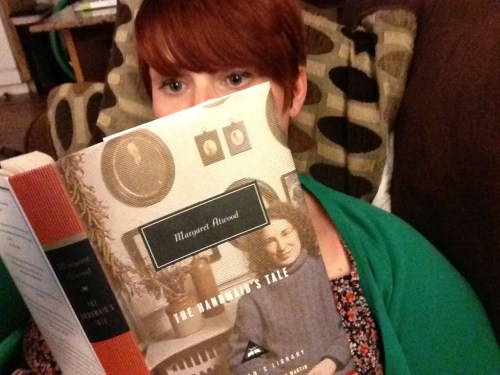
#20. The Handmaid’s Tale by Margaret Atwood

#20. The Handmaid's Tale by Margaret Atwood

My husband lent me his copy of The Handmaid’s Tale about two weeks ago, thinking I would like it because of my passion for feminism as well as my interest in awesome/bleak literature. After having finished it, I heartily commend Joe on his recommendation. Atwood creates a world only slightly removed from our own — perhaps only three, four years in the future, a world that has drastically shifted under a fundamentalist military coup and changed how society operates based on gender. The world is a little different here and there, though we still recognize it so well it sends shivers up the spine: toxic waste, environmental infertility, biological warfare, completely automated banking. We glimpse this world through a document left behind by a Handmaid named Offred, who describes her day-to-day life as well as memories of the time before, when she had a normal life with a family and a job. She also describes the shift, how slowly yet suddenly America became the extremist nation state of Gilead, and her reprogramming experiences at The Red Center in an attempt to assimilate these women to the new regime.

I don’t want to give too much away, because if you have never read it the shocking nature of a Handmaid’s purpose is made all the more powerful. I will say that it was moving, upsetting, and intriguing all at once, and punctuated perfectly by a “Historical Notes” section at the end, which serves as a kind of in-world epilogue. It is the future, more than a century beyond the events that Offred shares, and a symposium is being held to discuss research into Gilead society. It is with great levity that they touch on the heartbreaking, terrifying moments of Offred’s life, and is perhaps the most chilling part of the entire story.

This is a must-read novel for everyone, as it remains eerily timely almost 30 years after its first publication. Dystopian literature can sometimes be dismissed as too unlikely, too advanced, too brutal to really exist. Yet The Handmaid’s Tale gives pause, for it is a timeline that could all too easily fall into place.

1 Comment

September 15, 2013 · 2:49 pm

#13 – #18. Scott Pilgrim Vol. 1 – 6

#13 - #18. Scott Pilgrim Vol. 1 - 6

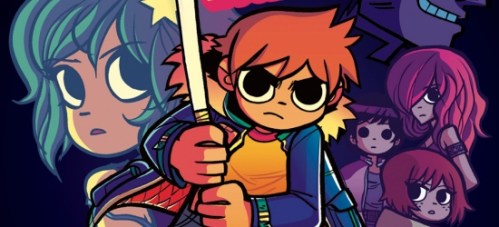
Funky hair, video games, dive bars, subspace highways, broken hearts, and samurai swords. One of the coolest series you’ll ever read.

Leave a comment

July 30, 2013 · 5:06 am

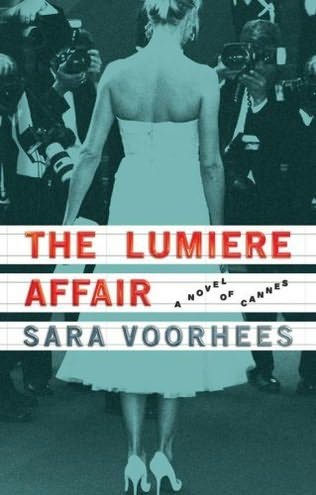
#12. The Lumiere Affair: A Novel of Cannes by Sara Voorhees

ImageI’ll be perfectly honest with you: I picked this book up for 50¢ at Hastings while my husband and I were out a few weeks ago. I did not have expectations, good nor bad, only the thought that it was a pretty good deal. I was drawn to the book from its summary of a young film critic covering the Cannes Film Festival despite emotional conflicts about being in France. With my own background in film studies and my somewhat naive delirium over the big festivals, I was sold. (And hey, it was half a dollar.)

Our hero, Natalie, loses her mother at a young age in a bizarre accident which occurs during a picnic in the French countryside. After the event, she is sent to live in New Mexico with a father whom she had never met. Her dad watches movies with her in various attempts to cheer her up and bond with her, and she starts writing as a professional film critic. In her years of press junkets and festival coverage, she never goes to Cannes; it is only the possibility of losing her house which persuades her to accept the well-paying assignment, and once she is there she is in a state of nearly constant turmoil. She misses the mother she never really knew, longs for the French cities she only half-remembers, and doesn’t understand how other people seem to have such a damn easy time connecting to one another. Once she finds a strange link between her mother and an acclaimed French producer, she calls on an old family friend to help her unravel the mystery of her childhood, of her mother, and of the love in her life she feels she has never truly experienced.

It’s a fun, quick read — what you would probably call a “beach read” or a “poolside read,” even though I read it laying on my carpet with a cat on my knees — which gives great insider information about the life of a film journalist while tenderly exploring the things in the past which hold us back from the future. I especially enjoyed the various film and meteorological quotes at the beginning of each chapter; they set a great tone and helped compliment numerous analogies throughout Natalie’s journey to lightning storms and the film industry.

I wound up really enjoying this book, and I am glad I went out on a limb and picked it up.

Leave a comment

Filed under Uncategorized

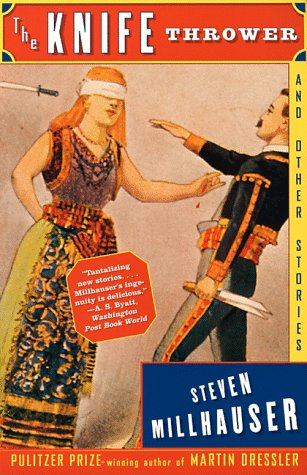
#11. The Knife-Thrower and Other Stories by Steven Millhauser

ImageThis is my first reread of the year, The Knife-Thrower and Other Stories. It was recommended to me by my good friend and then-roommate Colleen several years ago. At first we just read the title story (assigned for one of her classes) but in no time at all we had consumed the complete collection. It was unlike anything I had read before: it was whimsical while rooted in a reality I immediately recognized, heartfelt and chilling in equal measure.

A review printed on the back cover sums it up so well: “As Gothic as Poe and as imaginative as Fantasia, Millhauser’s deceptive fables are funny and warm. But they’re dark as dungeons, too…He bewitches you.” — Entertainment Weekly

The stories themselves have very diverse settings — quiet American suburbs, Old World cities of Germany, strange swampy houses left in ruin — while maintaining two strong themes. First, the overwhelming “moral” of each story seems to be, in one way or another, the dangerously dark thrill of excess and dreams. The secondary theme, the resounding question, is simply: what can we, as a society, be expected to do about it? Many of the stories are told in a collective voice, an entire town in outrage or a whole generation of people enthralled. This idea of unity in the face of strange realities, of enigmatically quiet young women and underground tunnels and flying carpets and robot theater, make these surreal tales all the more haunting.

My favorite stories are “The Sisterhood of the Night,” “Clair de Lune,” and “Paradise Park.” Cheeky, nostalgic, and mesmerizing. I cannot recommend this book more strongly!

Leave a comment

Filed under Uncategorized

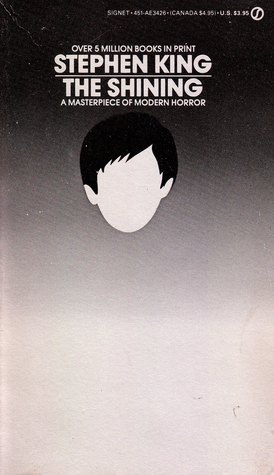
#10. The Shining by Stephen King

ImageThe Shining is, obviously, a modern horror classic. Everyone knows the story in one way or another: isolation, madness, murder, ghosts, all in a grand hotel. Kubrick’s The Shining is one of my favorite films, and I recently saw the documentary Room 237, so my interest in exploring the novel was particularly piqued.

I know King did not like Kubrick’s film adaptation. (This has apparently softened in more recent years, but at the time of the film’s release he was quite angry with the iconic director for tossing his screenplay and leaving huge chunks of familial context out.) They’re actually a bit hard to compare, when all is said and done. They are two entirely different animals, the enigmatic world of the films’ Overlook Hotel and the menacing depths of the novel’s Overlook. One tells a story of grim madness with a ghost and ghoul or two amid unnerving symmetry and sumptuous cinematic detail. One tells the detailed story of a family’s very gradual descent into the dark history of an incredibly haunted place. The tone of the film is one of doom from the very beginning; the book is one of utter suspense, as bumps in the night are interrupted by the mundane tasks of everyday life. And familiar things that become unfamiliar are, in my opinion, far more terrifying.

I really enjoyed the novel. The characters are so easy to relate to in the beginning that it becomes even more sickeningly frightening to see Jack Torrance, recovering alcoholic trying to pull his family back together, truly become consumed by the spirit of the Overlook. The slow build to all the visions and voices the hotel has to offer the Torrance family creates an unforgettable atmosphere of excitement mingled with dread.

It’s an interesting study in how memories are like ghosts, haunting us and causing us to haunt one another.

Leave a comment

Filed under Uncategorized

#9. Ghost Stories of an Antiquary by M.R. James

This collection is often heralded as the beginning of the modern ghost story. James, a meticulous professor with a penchant for scary tales, began writing ghost stories to read aloud to friends by spooky candlelight. He became highly influential for replacing Gothic tropes with antiquarian aspects, the theme of undying evil that waits for unwitting victims, and picturesque villages or seaside towns. (H.P. Lovecraft was heavily influenced by James.)

He sets a great atmosphere of suspenseful terror by introducing a reserved gentleman protagonist and plopping him in the middle of some mundane business such as sketching an ancient church or going on a golf vacation. From there, some suspicious artifact is uncovered and their day-to-day business becomes much more bizarre and disturbing. Though they all follow this pattern, each story is still uniquely frightening. “Number 13,” “The Mezzotint,” and “Oh, Whistle, and I’ll Come to You, My Lad” are my favorites.

Image

Leave a comment

Filed under Uncategorized

#8. Snow Crash by Neal Stephenson

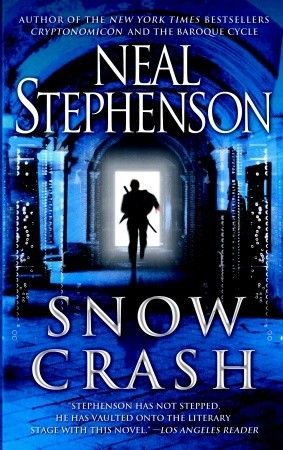
ImageI finally read a book that my husband and college friends have been heralding for a long time: the ultimate wink-and-a-nod cyberpunk thriller, Snow Crash. The book weaves together the various bits and bobs of the unlikely partnership of a katana-wielding, pizza-delivering online warrior prince and a sassy teenage street courier with an awesome skateboard and a soft spot for mechanical dogs.

The story gets complicated quickly. Alongside Hiro (our katana man) and YT (our street courier), there’s the Mafia, an entire online social structure known as the Metaverse, a dangerous virus, the Feds, Sumerian mythology, a hydrogen bomb strapped to a motorcycle, religious fundamentalists, and a lot of awful neon franchises from residential enclosures to drive-through liquor stores. It’s a fun, freaky romp through the wasteland of an L.A. that, at this point in time, doesn’t seem so far in the future.

The nearly 500 pages of this book go very quickly. There are lots of fun, futuristic action scenes mixed in with highly cerebral passages about ancient languages and the nature of the brain. If you enjoy sci-fi, linguistics, or just cool storytelling, you’ll really enjoy this novel.

1 Comment

Filed under Uncategorized