Tag Archives: fiction

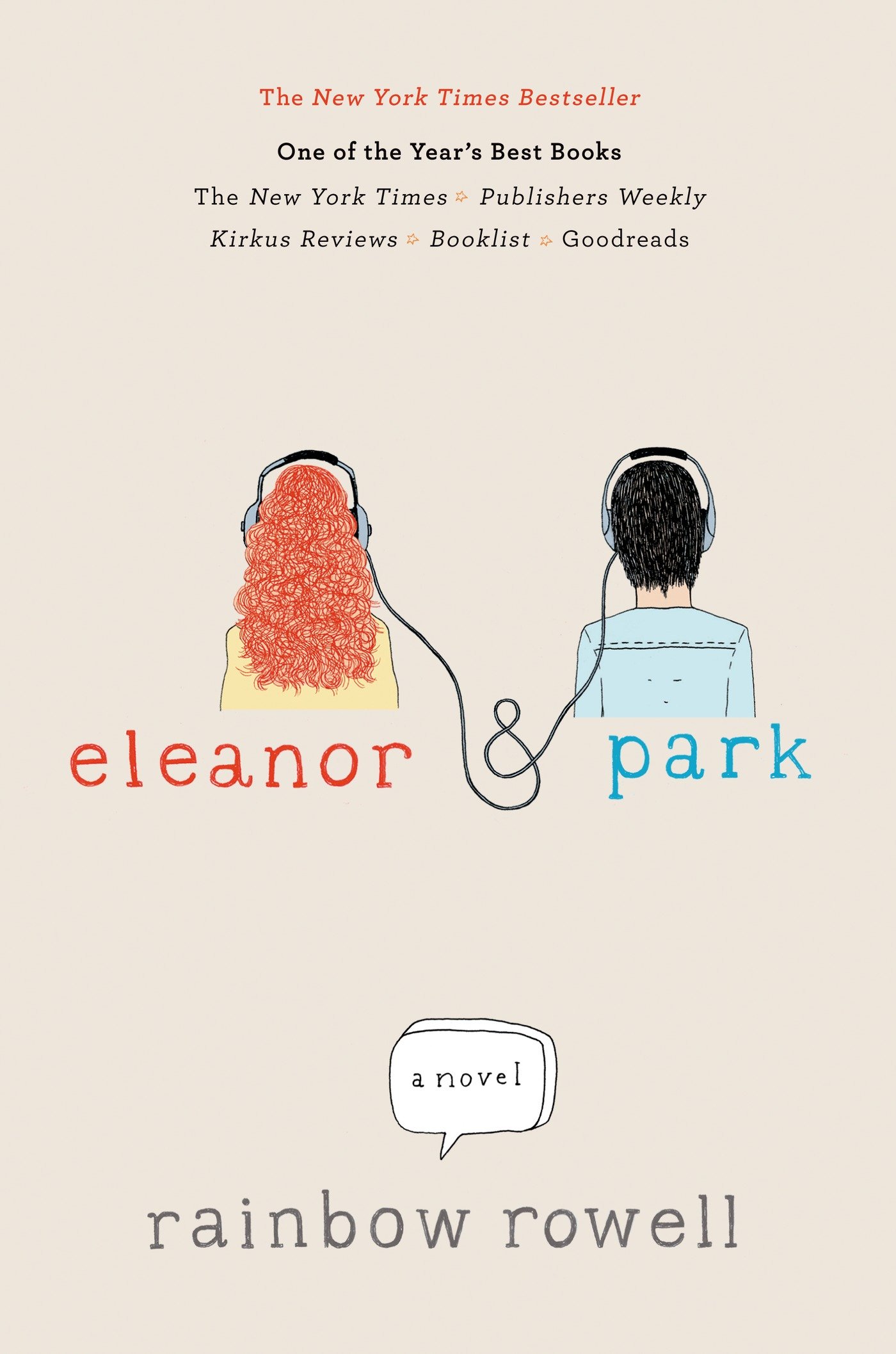
#12. Eleanor and Park by Rainbow Rowell

eleanor and parkEleanor and Park is an unlikely love story about two misfits in the mid-80s who find out they fit with each other. Though that sounds like the plot summary for a lot of YA books about young relationships (minus the 1980s, probably), Rowell really has a gift for putting you inside the heads of our titular protagonists. The chapters are divided between the two POVs. Many shared moments are expanded for the reader, as they first read how Eleanor experienced something, then read how Park perceived the same event. Other chapters are internal revelations exclusive to that character; hard, secret truths about sincerity, identity, sex, family dysfunction, and abuse. I listened to this book on Overdrive, and the two voice actors reading as Eleanor and Park did a wonderful job.

Eleanor is the new girl on the school bus, a curvy girl with wild red hair and bright, unusual clothing like mens’ Hawaiian print shirts and scarves tied all around her arms. Park is a Korean-American teen who’s into punk rock and getting a driver’s license. When he gruffly tells her she can sit next to him on the bus that first awkward day, he sets off a chain of interactions that will bring them closer and closer together until they can’t bear to be apart. Sharing comic books and mix tapes, they are two bright, hopeful blossoms on the incredibly bleak landscape of their drab neighborhood, which Eleanor refers to as The Flats. Eleanor challenges Park and confuses him, in love with him but unable to fully trust the intentions of anyone around her. Park wants to love Eleanor forever, though at 16 years old, she skeptically remarks several times that they are no Romeo and Juliet.

It’s a real, raw story about falling in love for the first time, facing your demons, and listening to The Smiths on the way to school. I would highly recommend it.
Leave a comment

Filed under Uncategorized

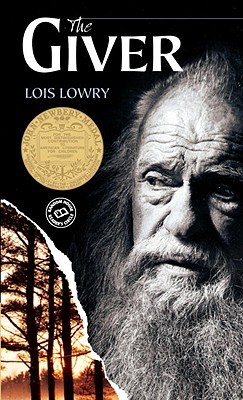
#11. The Giver by Lois Lowry

giverI have to begin this post by expressing my satisfaction with Overdrive, a library lending app that allows you to borrow eBooks and Audiobooks from your local library right to your devices. It is wonderful. I am actually a bit disappointed that I have not used it until now, but I intend on utilizing it quite a bit from now on.

I used to listen to Audiobooks quite a bit when I was living in Iowa City. I walked, biked, or took the bus wherever I needed to go, and I had ample time to listen to stories on my 20 minute walks to work, or on a solo bus ride to Coralville. One summer I listened to probably 10 full novels, since I had picked up hours working at the library removing old RFID tags from our entire collection of media. Well, this past month I have taken up walking and running once or twice a week, and remembered how much I used to enjoy Audiobooks. Browsing Overdrive, I saw that The Giver was available. A beloved elementary school classic, it was a title I had often seen but never picked up for myself.

The Giver is a science fiction tale of Sameness. In the Community where Jonas has grown up, all the dwellings are the same. All the people are ultimately the same, a certain number of each young age group with the same tunics and hairstyles and bicycles. But to Jonas and his friends, it is a secure world. It is very safe and ordered in the Community, with simple family units expressing their feelings each evening and doing their Community-assigned jobs. There is no pain in his world, no confusion. But Jonas feels a little different than the other children in his Age 11 group. He can see things in ordinary objects that other people cannot, perceive small changes in things like apples or strands of hair. He doesn’t understand these odd visions until he receives his job assignment and meets The Giver. Through him, Jonas learns to question the rules and order of his Community, and even the people he cares for the most. And after he has received what The Giver has shared with him, he knows he can never go back to living the way he did before.

This is an excellent dystopian novel, and although it was written as a children’s book, its deceptively simple language and dark themes make it just as compelling for adult reading.

1 Comment

Filed under Uncategorized

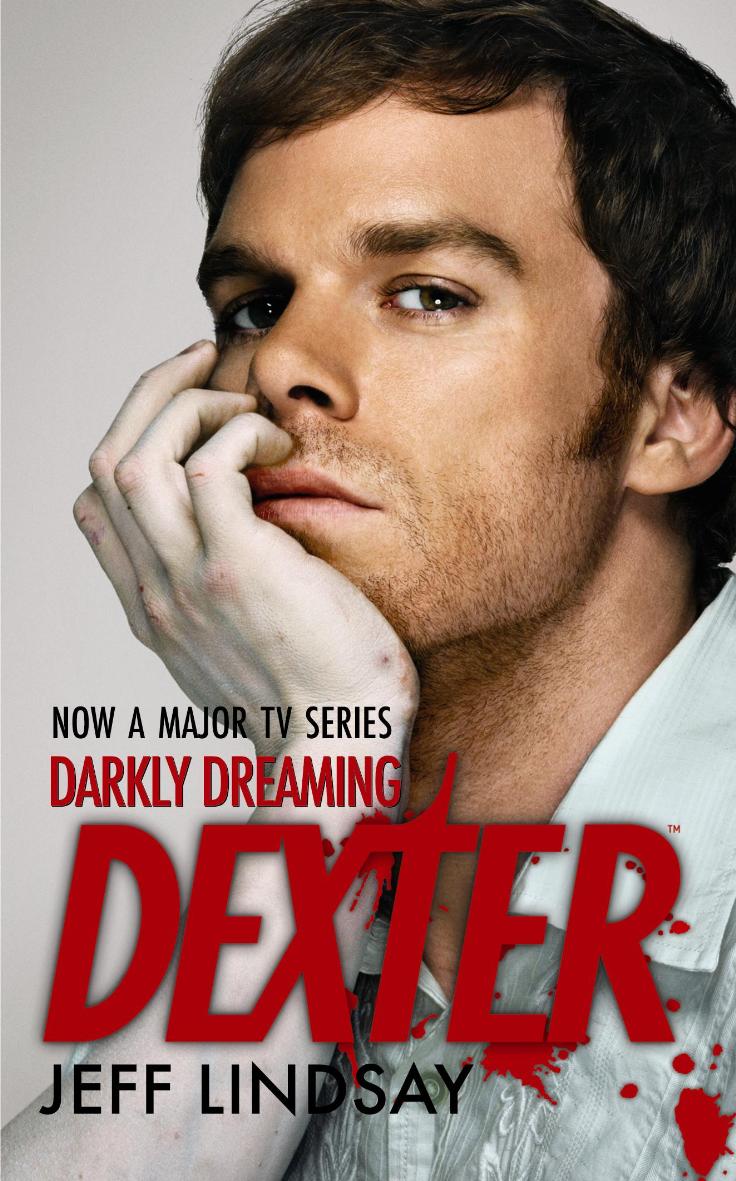
#10. Darkly Dreaming Dexter by Jeff Lindsay

darkly-dreaming-dexter-12Sometime between June and August, I read Darkly Dreaming Dexter and forgot to write about it. This past summer was a blur of road trips, celebrations, and humidity. I remember reading it after introducing Joe to the first season of Dexter, but before loading up the UHaul with all our earthly possessions. In any event, I read Darkly Dreaming Dexter, and I must confess that it was hard to get into at first. This is one of those peculiar circumstances where the set-up chapters (who’s who, and why, and where, and is that a dead body in the dumpster?) are actually so similar to the pilot episode of the show, I was quite bored.

As a side note, when it comes to adapted work, I never quite know whether to read the book first, or watch the movie/show first, or just stick to one or the other. It’s a tricky thing to revisit a story, or in this case a character, that you feel you already know so intimately. Surprisingly I have read books that are not as good as the movie, and less surprisingly, I have seen screen work that does not hold up as well as the novels they are based on. I am sure most fiction fans face that problem, though; especially right now, with so many comic and YA series becoming films.

Anyway, about 1/3 of the way through, the book and the show diverged a bit, and once I was reading new information and insights, I found it very enjoyable. The main focus of Darkly Dreaming Dexter is of course the titular character, Dexter Morgan. He’s a brother, a son, a forensic analyst for Miami PD, a boating enthusiast, and a serial killer. He’s just so lovable, though, the oblivious, non-malicious, and non-cannibalistic version of Hannibal Lecter. He grew up without the capacity to feel, or to see humans as valuable individuals. This seems to be only something he holds onto from his past, however, as he expresses great affection — and possibly even love — for his late adoptive parents and his sister Debra. Despite his apparent sociopathy, he has a wicked sense of humor and a keen ability to read people, giving many passages of this dark story some fun levity.

In this first book of the Dexter series, A new serial killer has popped up in Miami. He leaves his victims bloodless and clean somehow, which intrigues Dexter to no end. After a very short while, it becomes obvious this rival killer is leaving the bodies specifically for Dexter to find. But why? Is it dangerous? Or is it an invitation to play?

This is ultimately a fun read, especially if it is your first foray into the world of Dexter Morgan. If you have seen the show and haven’t read the novels, I’ll be honest with you: you just have to stick with it. Some of the characters and twists are very different from the show, and by the end you might be as shocked as I was that it concludes on a very different note than the end of the first season.

Leave a comment

Filed under Uncategorized

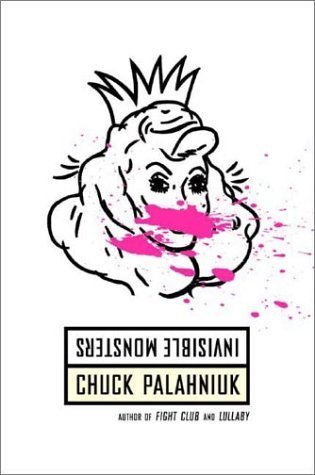
#8. Invisible Monsters by Chuck Palahniuk

3304435Invisible Monsters by Chuck Palahniuk was one of his earliest books, though it was initially rejected by publishers for its disturbing content. After the success of Fight Club, publishers came around to this sordid story about high fashion, a galaxy of pills, vaginoplasty, AIDS, a shotgun, and the Brandy Alexander Witness Reincarnation Program.

Our beautiful, unnamed narrator drifting around in a rental car with Seth Thomas and the queen supreme Brandy Alexander has a bit of an identity crisis going on: she’s missing half her face. A mysterious gunshot through her half-open car window led her to the hospital, where she lost her modeling job and her fiancé but was introduced to Brandy, a larger-than-life version of herself well on her way to becoming a woman.

The paragraphs within chapters jump abruptly from the past to the present, from the end to the beginning, and back and forth between what the future should have been and what we all wound up with instead. Our narrator compares reading her story to reading an article in a fashion magazine which makes you “Continue to Page ___.” “No matter how careful you are, there’s going to be the sense you missed something, the collapsed feeling under your skin that you didn’t experience it all. There’s that fallen heart feeling that you rushed right through the moments where you should’ve been paying attention. Well, get used to that feeling. That’s how your whole life will feel some day. This is all practice.”

This book has a considerable number of plot twists, even for a Palahniuk novel. If you pick this one up, just keep in mind: names change, uppers fade, and mascara runs, but you can only truly change if you challenge yourself more than you think you can bear.

1 Comment

Filed under Uncategorized

#7. Survivor by Chuck Palahniuk

survivorA few weeks ago I started (and promptly finished) Survivor, a book that was recommended to me long ago and has been sitting — neon orange — on my bookshelf for the better part of a year. I have become quite a fan of Palahniuk’s novels over the last five years by bits and pieces, and the rapid, increasingly bizarre narrative in Survivor did not disappoint.

Tender Branson: fundamentalist terrorist? Domestic servant doused in bad luck? Or does the universe have a plan for even its most lost inhabitants?

Tender is one of the last surviving members of a death cult, checked on frequently by a listless social worker and called nightly by misguided souls on his phony suicide hotline. In the course of his lackluster existence, which he constantly questions as his fellow Creedish peers dwindle, he meets Fertility. She claims she can see the future, and Tender claims he doesn’t intend on having one. Between mysterious murders, premonitions, tips for getting blood out of fur coats, and a sudden media hype around Tender as a spiritual giant, Survivor tells a story about our contradictory desires for both destruction and redemption.

I quite enjoyed this book. The characters are complex individuals, sad people who make unreasonable, devastating choices but who don’t know many alternatives. The story of Tender Branson’s life is told by Tender himself into the black box of a hijacked airplane. It’s a thrilling set-up from the first page…Oh, that’s another interesting feature of the book: the page numbers are backwards, so as you read the book the pages count down to the end.

3, 2, 1.

Leave a comment

Filed under Uncategorized

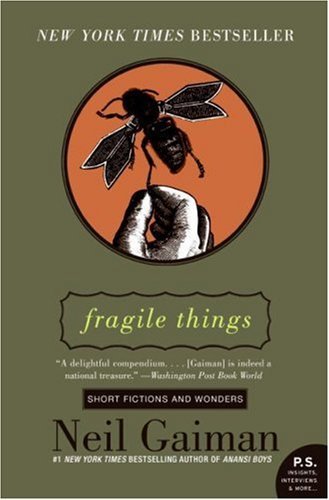
#5. Fragile Things & #6. Coraline by Neil Gaiman

FragileThingsShortFictionsandWondersPS_PaperbackPS_1213846460After reading American Gods and The Ocean at the End of the Lane last year, I thought I might dive in to the other Gaiman books on my shelf.

Neil Gaiman’s Fragile Things is a short story/poetry collection full of creepy vignettes and heartfelt nostalgia. I was blown away just by the first paragraph of the first story, a Sherlock Holmes/H.P. Lovecraft mashup of sorts called “A Study in Emerald.” What if the Old Ones…came? And then life continued as normal? It is ingeniously written, blending the narrative deftness of a detective story and the weighty gloom of supernatural horror, and got me excited for the remainder of the book. Some of my other favorites from this collection are “October in the Chair,” “Locks,” “Instructions,” “Feeders and Eaters,” “Goliath,” “How to Talk to Girls at Parties,” and “Sunbird.” Fairy tales, body horror, flying saucers, even a brief immersion into the Matrix universe — the creativity and diversity are so impressive!

Coraline is a delightful book, one I have been meaning to read for quite some time now. I thoroughly enjoyed the film that came out, and even had the very great privilege to talk to Henry Selick about it at SXSW in 2009. Coraline is a bright young girl who considers herself an expert explorer. Though she feels her parents and her life are fairly dull, she learns to be brave under some nightmarish circumstances that occur in her very own house. The edition I read was filled with amazing artwork, including some particularly frightening images of the Other Mother.

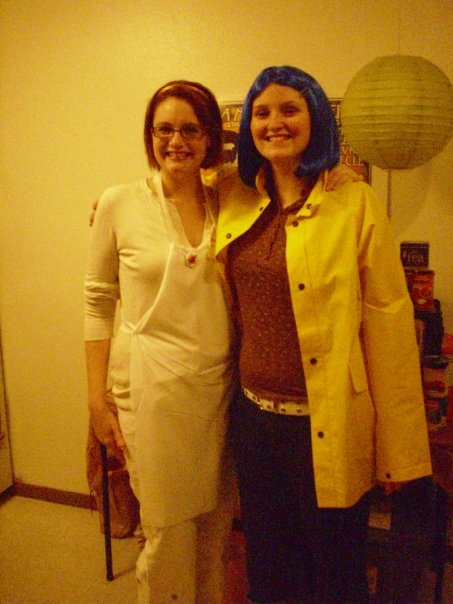
1915741_789985974759_6254125_n

Can you tell that I was a little bit into Coraline? Coraline/me, right. Flo the Progressive Lady/Delia, left.

Does anyone have any more Neil Gaiman recommendations for me?

Leave a comment

Filed under Uncategorized

#4. My Brother’s Book by Maurice Sendak

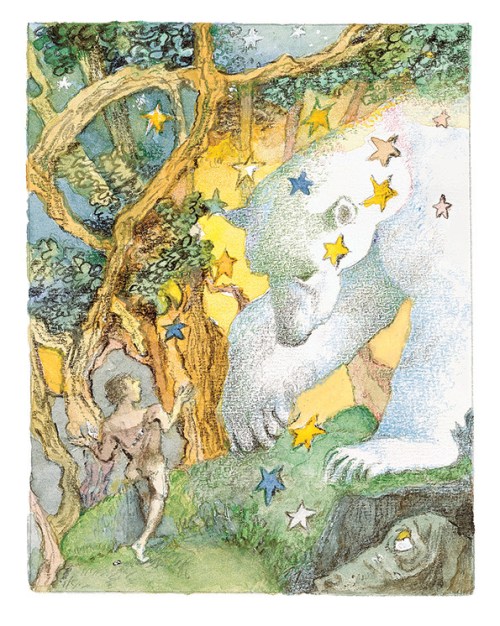
My Brother's Book by Maurice Sendak

Leave a comment

June 15, 2014 · 7:59 pm

#2. The Clocks by Agatha Christie

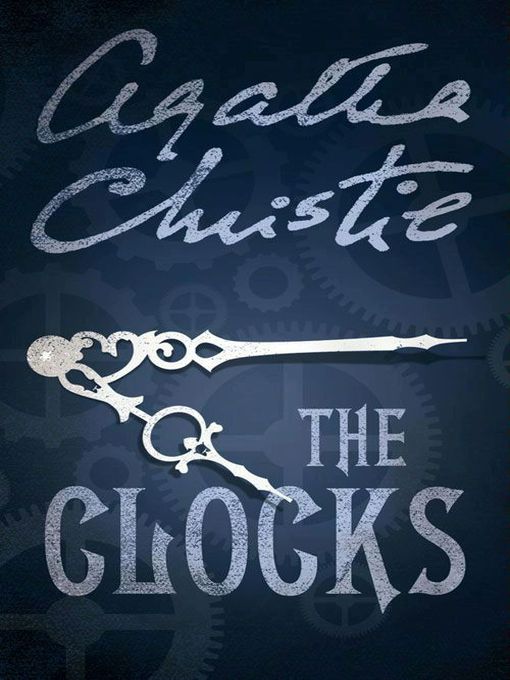
ImageMy first Hercule Poirot mystery, I picked this up as a quick read while I figured out what my next big literary indulgence would be.

The book read quickly; as you can see, I did not.

This mystery novel is another great ensemble piece by Agatha Christie: a hard-nosed detective, a spy with his heart on his sleeve, a screaming typist, mysterious bodies (both breathing and not), a heap of peculiar neighbors, and of course, the armchair sleuth Poirot.

A shorthand typist is called to a woman’s home in an old Victorian neighborhood on a fairly normal afternoon. What she finds sets off a chain of inquests, questions, and even more murders. In a room with a dead body, a blind woman, and four mysterious clocks, the key to this murder isn’t in the complicated scene, but in the simplest of details.

Leave a comment

Filed under Uncategorized

#1. NOS4A2 by Joe Jill

photo

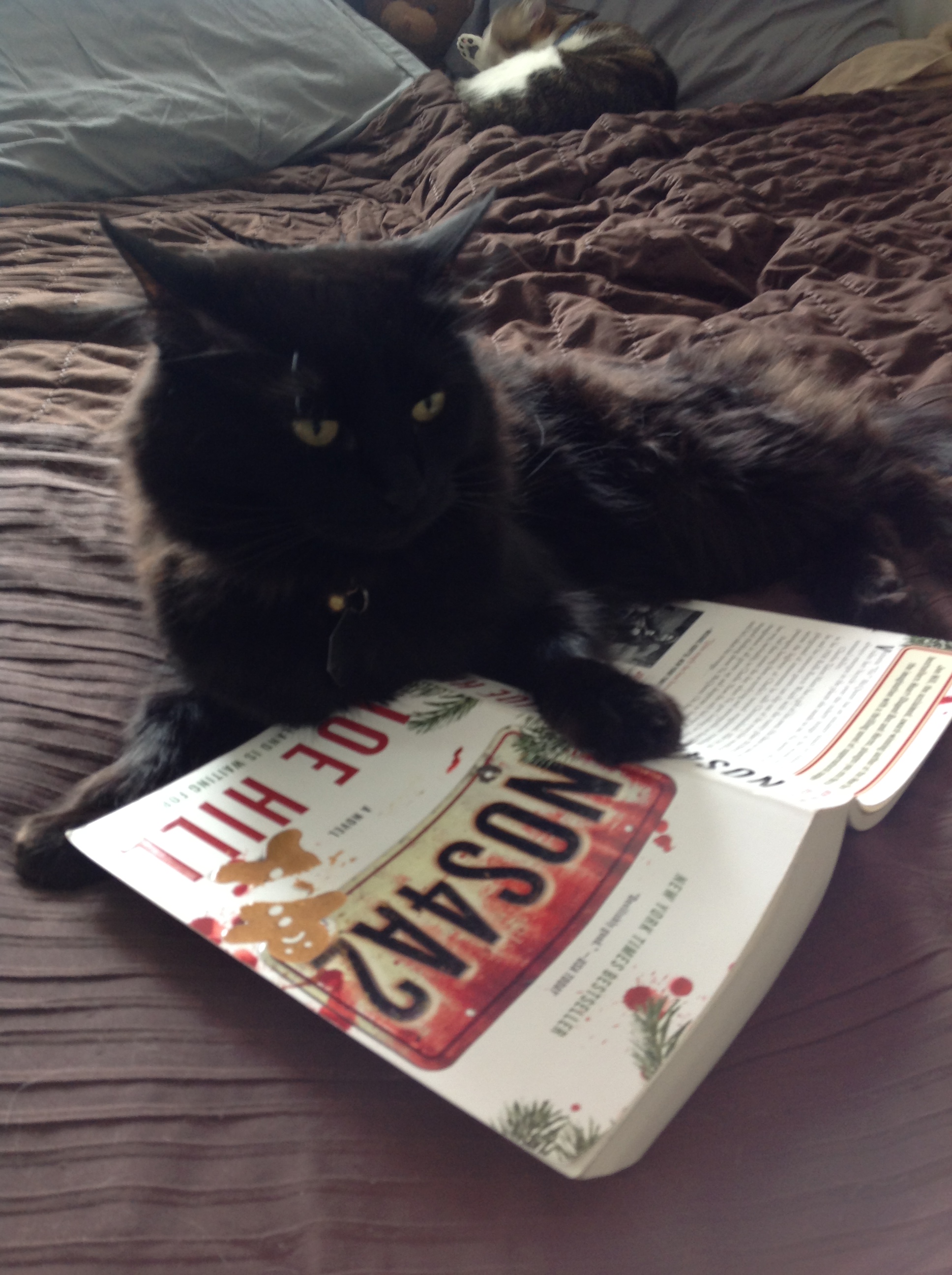
Jade enjoys this chilling tale.

Joe Hill’s NOS4A2 is a thriller, a prolonged suspension of disbelief, and a nightmare of familiar things turned grim. Charlie Manx, a seemingly soulless individual responsible for the disappearances of dozens of children, has a problem. He needs some help tending to Christmasland, the amusement park of winter delights, year-round! A place of terrifying delights where lost children will be happy…forever. The only thing in his way is a the troubled but determined Vic McQueen, a woman whose one afternoon encounter with Charlie Manx as  a teenager has left fingerprints on every part of her life.

Charlie Manx and Victoria McQueen have something in common, a gift for finding places that aren’t on the map. Covered bridges, magical cars, and Scrabble tiles all play a part in the strange world of NOS4A2. Referred to as “inscapes,” these rarely attainable places will resonate with fans of Joe Hill’s other works, with sly allusions to Heart-Shaped Box, Horns, and Locke and Key.

This novel definitely fulfilled my need for creepiness. The character of Charlie Manx and his wretched Rolls-Royce Wraith will haunt you days after finishing this macabre story. Victoria McQueen is an interesting hero — half-mad from her unusual abilities, heartbroken by a hard life — who sometimes makes it hard for us to root for her. Ultimately, we see the various ways disappointment and disconnection have shaped her (along with the occasional phone calls from dead children) and how she never stops trying to make her wrongs right.

I really enjoyed this novel, and my admiration for Joe Hill grows stronger with each new book.

Leave a comment

Filed under Uncategorized

#24. The Ocean at the End of the Lane by Neil Gaiman

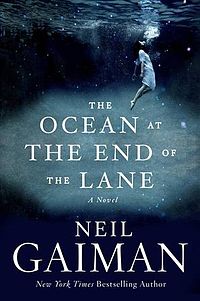
ImageAfter finishing American Gods, I quickly dove into The Ocean at the End of the Lane, also by Neil Gaiman. It is a charming, much shorter read than American Gods, though the mystery seems less precise. Gods is a gut-punch, a brain-bend, while Ocean is a sweet glance at supernatural worlds and the nature of memory. It reminded me very much of The Gates, which I read at Halloween, although instead of particle physics we are dealing with elusive magic which opens portals.

Lettie Hempstock is a strange eleven-year-old (who has probably been 11 for a very long time) who lives at the end of the lane where our unnamed narrator grew up. They share an incredible experience together, fraught with otherworldly creatures and ancient enchantments, but he finds himself with much different memories shortly thereafter. He forgets about her entirely until he finds himself at the end of that lane forty years later, escaping from a stuffy funeral reception. He sits by the duck pond there, which Lettie always called her ocean, and his childhood memories, vivid and frightening, come flooding back.

The story ultimately left me craving more, for there are many details left unexamined, unexplained — but the more I think on it, the more appropriate the absence of total clarity seems. The narrator is remembering his world as a 7-year-old, and there are many wonders that small children innately believe, instinctively do not question. The mystery is less precise, perhaps decidedly so. It  is certainly a book that draws a thick line between childhood and adulthood, of the things we try to remember and the things we lose forever. This is a great, quick read for a nostalgic evening.

Leave a comment

Filed under Uncategorized