
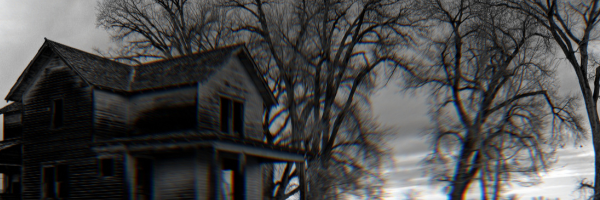
“Most times, a ghost is a wish.” – The Haunting of Hill House
It’s no secret that I love a good scary story. Even the barest skim of The Books reveals a long list of ghosts, monsters, vampires, and other creepy thrills. But nothing — nothing — gets my attention more than a haunted house story. It’s the perfect metaphor for pain, grief, fear, and identity. Haunted house stories are, by their very nature, deeply personal journeys, and the very best ones tend to make you more frightened of the protagonist’s motives than the ghost hiding under the bed. In 2020, I read several stories that center around hauntings.
In the Shadow of Spindrift House by Mira Grant
Mira Grant’s exploration of the haunted house theme centers squarely on Harlowe, a former teen detective (think Scooby-Doo, a tongue-in-cheek inspiration for several contemporary horror novels over the last few years) with a mysterious family history. It’s a short but effective story about loss and family, with a deeply upsetting basement.
If you like this book, I also recommend Mira Grant’s Into the Drowning Deep.
The Grip of It by Jac Jemc
This story had a lot of great atmosphere, but not a lot of substance. We meet Julie and James as they are in the process of buying a new house, and there is palpable tension in their marriage. A gambling problem, different career aspirations…they love each other, but they’ve been through a very difficult year where their trust in one another has been challenged. This book shows its cards pretty early. Will the house be haunted, or is their relationship too flawed to start over in this new home?
The energy of the prose is suspenseful, but ultimately frustrating as vivid descriptions of rotting wallpaper, mysterious childlike voices, and rainy, grey waterways lead to dead narrative ends. There’s obviously something wrong with the house, but it infects its owners, too, creating an inescapable enigma of the nature of the haunting. We are given tantalizing glimpses into the previous owners, rumors swirling through the town, and a shared torment that drives everything forward. But the resolution is too subtle, the pacing is a little too brisk, and the fear featured most prominently is less about the ghosts in the walls than the idea of putting down a down payment on a house that has mold issues.
If you like this book, I also recommend The Apartment by S.L. Grey.
Lovecraft Country by Matt Ruff
The second chapter of this excellent novel, Dreams of the Which House, is a take on Lovecraft’s short story, “Dreams of the Witch House,” with one of our main characters, Letitia, pioneering into a white neighborhood after an unexpected inheritance leaves her with enough money to buy a house. She moves into the Winthrop House, a somewhat dilapidated but once glamorous building owned by a notoriously nasty man named Hiram Winthrop.
[This next paragraph contains spoilers.]
Winthrop’s ghost is a virulent racist, but Letitia is determined to fix up the building and rent out the rooms to other Black Chicagoans who want to fight the redlining and discriminatory housing practices of 1950s America. She rebuffs the ghost again and again, even when he tries to kill her. She threatens to haunt him for all entirety if he does anything to her, so they come to an uneasy alliance. They are by no means friends, but they both want the house in good condition and even begin a game of chess together. When a group of violent young men threaten Letitia and later break into the house to burn it down, they mysteriously disappear into the basement as Letitia sleeps, none the wiser.
Letitia is a joy to read, a fun and confident woman who stands up for herself and does what’s right even when everything seems to stand against her. Her joy and ambition are her own, and I love that she has her own story, one in which she exists in her own space and is not just propping up our central protagonist, Atticus. This is a fantastic book, probably one of my top five books of the year.
If you like this book, I also recommend the television show, adapted by HBO. This story is depicted in the episode “Holy Ghost.” The show’s depiction of Hiram Winthrop is much less generous than the book’s and highlights Letitia’s bravery in the face of visceral racism and abuse.
The Good House by Tananarive Due
This book is a TREASURE. A DELIGHT. One of the best haunted house stories I have ever read in my life. It’s a story about curses, magic, youth, and intergenerational trauma. Its writing is rich and expressive, with a slow burn of dread as an old family curse spreads outward into the community of Sacajewa, Washington.
Angela Touissant has inherited her grandmother’s house, The Good House, on a plot of land that is considered a peaceful gem of the town. There, she experiences an unspeakable loss. It sets in motion a series of events that’s both unexpected and predestined, a bit of bad magic that broke the world a generation ago. As the points of view shift from person to person, we see a complicated interplay between Angela, her ex-husband, her grandmother, her son, and various townsfolk. It is excellent storytelling, leading the reader into powerful revelations about the deaths occuring in Sacajewa and the power in attempting to right hidden wrongs.
If you like this book, check out all the amazing things she is doing at https://www.tananarivedue.com/.
The Hunger & The Deep by Alma Katsu
Author Alma Katsu has written two books depicting historical events as slightly reimagined supernatural horror. I am going to classify them as haunted house stories even though one took place on a wagon trail and one took place on a luxury ship because people were living on them as homes while unruly spirits affected their journeys. It bends the parameters a little but I still think they’re worth noting here!
The Hunger is a story centering around the Donner Party’s cross-country wagon journey, a blend of accurate historical record utilizing real locations, names, and weather, with the spectre of ravenous spirits. It’s very effective and atmospheric, and reminded me a lot of The Terror in the way that the events of the book were terrifying before anything out of the ordinary even showed up. The isolation, fear, uncertainty, and sense of being lost were conveyed powerfully through several different characters’ accounts, with only the slowest introduction of otherworldly elements into the situation.
In The Deep, the lines between reality and fiction are much clearer, as the story leans heavily on the Irish folklore and superstitions that affect Annie, one of the employees on the Titanic. It is through her connections to its voyage that we experience the event, though we do occasionally see chapters written from other points of view. The mystery of Annie dominates the narrative, whether we are following her down a hallway or watching one of her charges play a card game many floors above. This was a less satisfying read for me than The Hunger, as I felt like it tried to do too many things at once. A lot of the book was a flashback, and sometimes the muddiness between the past and present felt intentional while other times it felt genuinely confusing.
Our unreliable narrator was also a bit too unreliable. Was she in love with one of the passengers? Had they met in another life? Or wait, was she actually thinking of someone else altogether? What are memories, even? Intriguing ideas but they became repetitive as our poor protagonist became bogged down by existential ennui while refusing to ever actually clear any of her questions up by having a conversation with…anyone. By focusing so much attention on what Annie didn’t know or didn’t believe, we lost the richness of having an ensemble of characters. This book strived to be a doomed love story, a ghost story, a mystery, a mistaken identity story, a story about very niche Irish lore, and a version of the tragedy of the Titanic, all at the same time.
I look forward to Alma Katsu’s next historical horror because I think she’s very gifted at capturing these time periods, but I did feel one was quite superior to the other.
If you liked either of these books, I also recommend The Terror by Dan Simmons.
 Earl Grey and A Million Words